

Acupuncture for Shoulder Pain in West Bloomfield
Relief for pain, stiffness, and restricted movement — with care that addresses both physical strain and nervous system stress
When Shoulder Pain Doesn’t Resolve on Its Own
Shoulder pain can develop gradually or appear suddenly after injury, overuse, or prolonged stress. It often limits daily activities such as sleeping, lifting, reaching, or exercising, and may persist even after rest or conventional care.
In many cases, shoulder pain is not isolated to the joint itself. Tension patterns in the neck, upper back, chest, and nervous system can contribute to ongoing discomfort and delayed recovery. When Shoulder pain is influenced by tension higher up the chain, particularly in the neck, where prolonged strain and guarding alter movement and load, acupuncture can be particularly effective.
A Whole-Body Approach to Shoulder Pain
Treatment in this practice focuses on understanding why the shoulder is under strain, not only where it hurts.
Care is guided by how your body presents on the day of treatment and how it responds over time. Circulation, nervous system regulation, posture, breathing patterns, and internal stress all influence how pain develops and resolves.
In Chinese medicine, physical symptoms are often viewed as expressions of underlying energetic patterns. The energy of the internal organs influences how the body manages stress, emotion, movement, and recovery. When these systems are under strain, tension may appear in predictable areas of the body.
In the case of shoulder pain, the Heart and Lung energy — which govern circulation, breath, and emotional processing — are commonly involved. Grief, sadness, or difficulty letting go may contribute to tightness across the chest, upper back, and shoulders, reinforcing physical restriction over time.
Rather than treating the shoulder in isolation, acupuncture often includes related areas such as the spine, breathing mechanics, and upper back, helping reduce protective tension and restore coordinated movement.
Sessions are unhurried and responsive. Time and space are part of the medicine, allowing the body and nervous system to settle and recover.
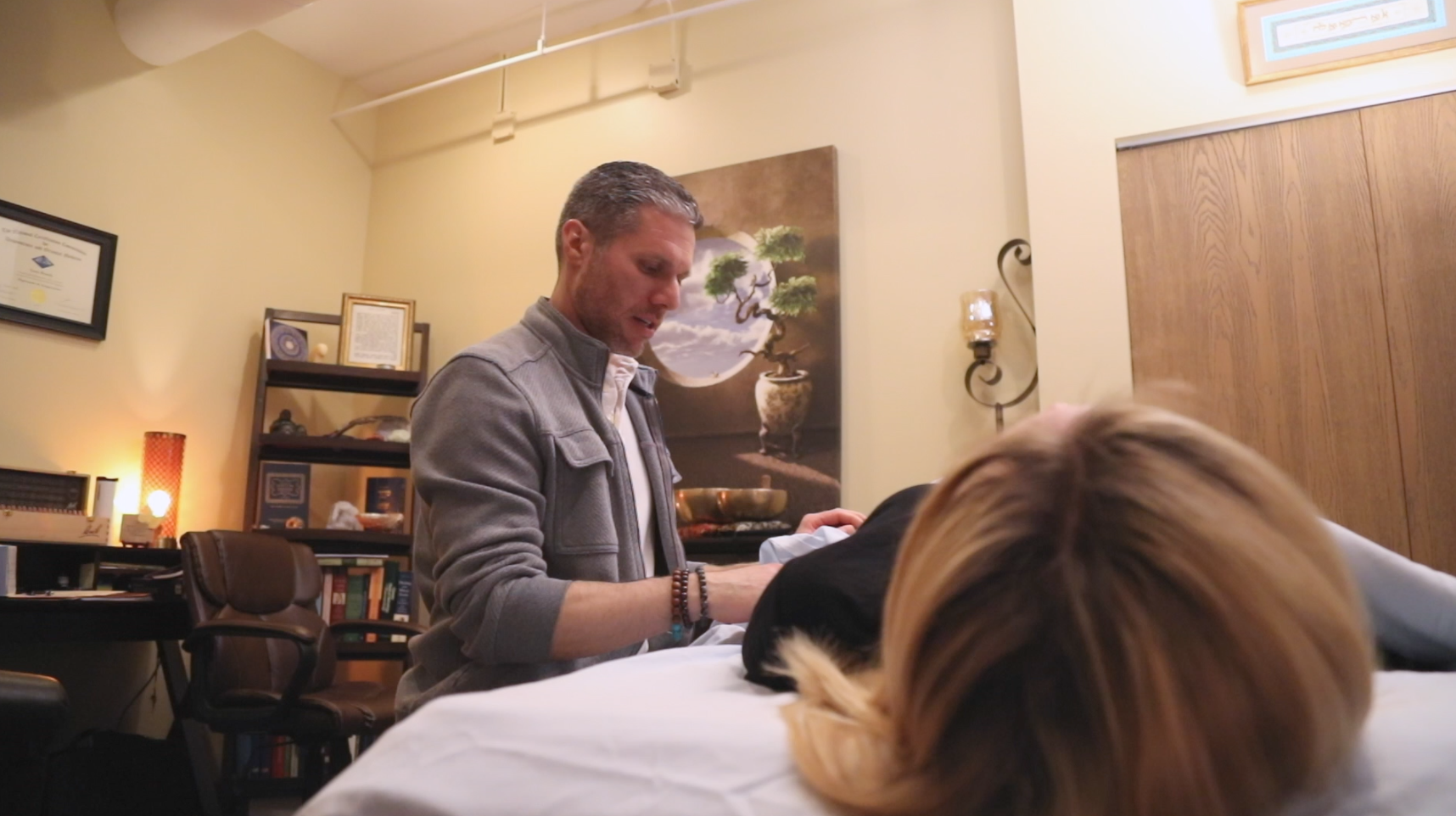
Pulse diagnosis process after initial intake from 2016
Shoulder Conditions Commonly Treated
Rotator cuff strain or irritation
Frozen shoulder
Shoulder impingement
Repetitive strain injuries
Pain related to posture or stress
Limited range of motion following injury
Post surgery recovery
What to Expect From Care
Your first visit includes time to understand your symptoms, movement patterns, health history, and contributing stressors. Treatment is tailored to your body and may evolve as your shoulder responds.
Many people notice gradual improvement in pain, range of motion, and overall ease of movement over a series of sessions. The goal is not only relief, but long-term functional improvement.

Serving West Bloomfield and Surrounding Communities
Stillpoint Acupuncture and Healing Arts offers personalized acupuncture care for shoulder pain in West Bloomfield, Michigan. Care is grounded, attentive, and designed to support both physical recovery and nervous system balance.
If you’re experiencing a different concern, you can review the full range of conditions we support through acupuncture and integrative care